Online Sports Betting


What Online Sports Betting Actually Is
Online sports betting is placing a wager on the outcome of a sporting event through a licensed bookmaker's website or app. You pick a market, say, which team wins, a point spread, or a specific player prop, see the odds the bookmaker is offering, and stake an amount you're prepared to lose. If the result matches your pick, the site pays out based on those odds. Miss, and the stake is gone. The mechanics are simple. What varies by operator is the breadth of markets, how competitive the odds are, and how fast you get paid when you win.
Coverage today spans most major sports, including football, basketball, baseball, tennis, and ice hockey, alongside niche markets a betting shop would never have bothered to price. A site's line-up usually scales with the size of its sportsbook operation. Every brand covers things a little differently, so checking the sport you actually care about is a better test than trusting a homepage banner.
How Odds and Markets Work
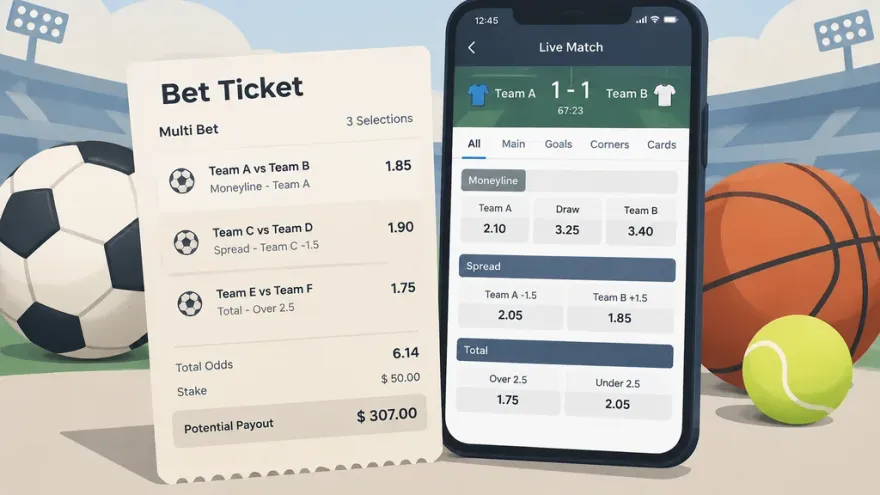
Odds are how a bookmaker prices risk. Most online sportsbooks let you switch between three formats. Decimal odds multiply cleanly against your stake. Fractional odds use the traditional UK style, like 5/2. American odds show plus/minus numbers, like +150 or -200. All three describe the same underlying probability and payout in different notation, so picking the format you find easiest to read doesn't change what you're actually being offered.
Markets go well beyond picking a straight winner. A moneyline or match-winner bet is the simplest form. Point spreads and totals (over/under) let you bet on margins rather than outcomes. Player and team props cover specific in-game events, from total points scored to whether a particular player records an assist. Parlays and combo bets link multiple selections into one ticket for a bigger payout at bigger risk, since every leg has to land for the bet to pay. More legs means more risk, and that's the whole tradeoff.
Live Betting and In-Play Markets
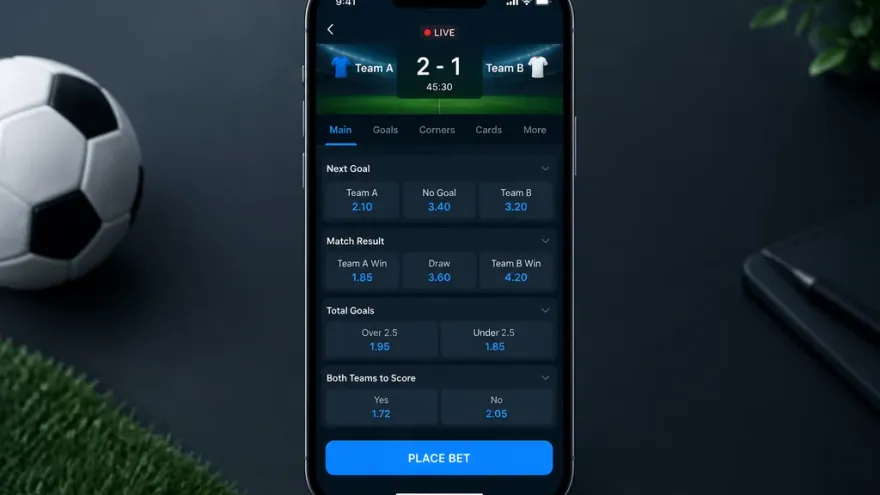
Live betting, also called in-play betting, lets you place wagers after a match has already started, with odds that update in near real time as the action unfolds. A tennis match might shift odds after a single service break. A football match can swing after a red card. The appeal is reacting to the game you're actually watching, something a pre-match bet locked in an hour earlier can't do.
The tradeoff is a small built-in delay. Most platforms stream odds with a brief lag behind the live action for processing and risk management, so a bet confirmed a beat after you see a goal go in is normal behavior. It's not a glitch, though exact delay varies by operator and sport. Markets can also be suspended briefly during key moments, like a penalty kick, until the bookmaker's system re-prices the situation.
Choosing a Legitimate Sportsbook
Licensing is the first filter and the one that actually matters. A sportsbook regulated by a recognized authority, such as the UK Gambling Commission, the Malta Gaming Authority, or a relevant state-level regulator in jurisdictions that license locally, is typically subject to oversight that can include segregated player funds and fair-pricing checks, depending on that regulator's specific requirements. The license information is usually in the site footer. Look it up on the regulator's own public register, since a copied badge costs nothing to fake and tells you nothing on its own.
After licensing, payment methods and payout speed are the next practical filter. A sportsbook that takes your deposit instantly but takes days to process a withdrawal is telling you something about where its priorities sit. Published, verifiable payout times and a visible range of banking options are reasonable signals, far more reliable than a vague "fast withdrawals" banner. Odds competitiveness is harder to judge from the outside. Comparing the same match's line across two or three licensed books before placing a bet is a quick, free way to see whether one site is consistently shaving value off its prices.
Bonuses, Free Bets, and the Fine Print
Welcome offers for new bettors typically come as a free bet, a deposit match, or bonus credit tied to your first wager. Nearly all of them carry conditions that matter more than the headline number. A "bet $50, get $50 in free bets" offer usually pays the bonus portion out as more free bets rather than withdrawable cash, and those free bets often carry minimum-odds requirements before they count.
Loyalty programs and reload offers for existing customers work on a similar logic. Read the specific terms for odds minimums, eligible markets, and expiry windows before assuming an offer applies to the bet you're about to place. Wagering or rollover requirements, where they exist, are operator- and offer-specific. The only reliable way to know what a given promotion actually costs you is reading that operator's own terms directly.



Betting on Mobile
Mobile is now how most online sports betting actually happens, since in-play markets are built around checking a line while you're already watching the game. Most sportsbooks run on a responsive mobile site that works directly in a phone browser, and many also offer a dedicated app with push notifications for line moves or bet settlement, if you'd rather have an icon on your home screen than a bookmark.
Screen size shapes what's practical. A full list of in-play markets that's easy to scan on a monitor can get cramped on a phone, so better mobile sportsbooks prioritize the most common markets, moneyline, spread, total, up top, and bury longer prop lists one tap deeper. Connection speed matters more in live betting than anywhere else. A lag on mobile data, combined with the platform's own pricing delay, can mean the line has already moved by the time your bet confirms.
Betting Responsibly
The bookmaker's odds are built to favor the house over the long run, across every market type described above. That holds true even on bets you feel confident about. Treat sports betting as entertainment you're paying for. Only stake amounts you're genuinely comfortable losing, and walk away once a session stops being fun.
Most licensed sportsbooks offer built-in tools worth setting up before you need them. Deposit limits, loss limits, time-outs, and self-exclusion are standard across regulated operators. If betting stops feeling like entertainment and starts feeling hard to walk away from, that's the signal to use those tools or step back. Resources exist if you want support making that call.
FAQ
Is online sports betting legal?
What's the difference between fixed odds and live betting?
Do free bets pay out as cash?
Why did my live bet get delayed or rejected?
How fast do sportsbooks pay out winnings?
Related Articles


West Casino Multi Game Feature